Five stretches for desk workers
The five stretches I hand out most often for desk-bound necks, shoulders and hips — about six minutes, and all of them doable beside your desk.
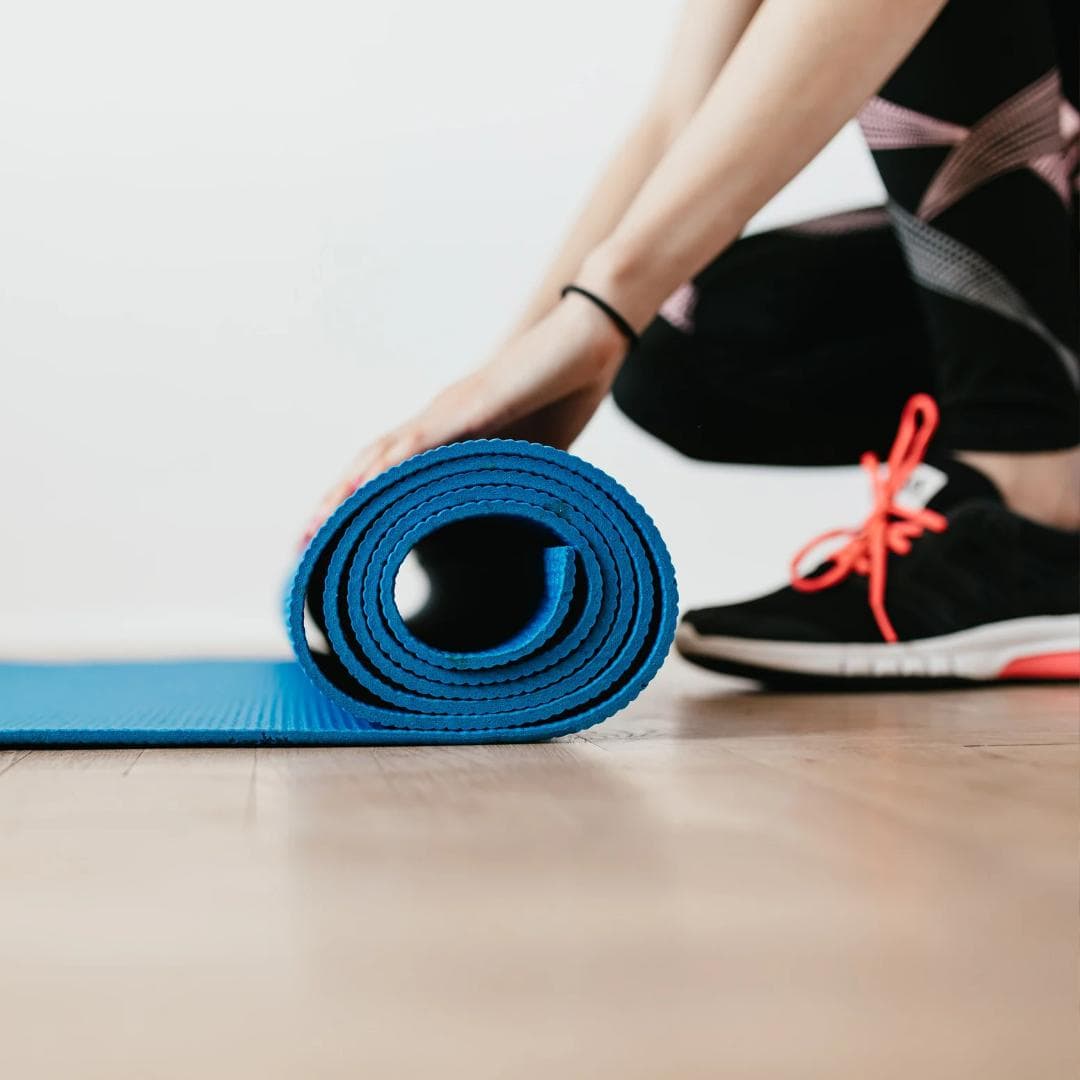
Most of the neck and shoulder pain I see in the practice has nothing dramatic behind it. No fall, no accident — just a laptop, a chair that is slightly too low, and a diary with no gaps in it. Your neck and hips are not damaged by sitting; they simply get stiff and unhappy when they hold one shape for hours at a time.
These are the five I hand out most often. They take about six minutes and you can do all of them beside your desk.
1. Chin tucks. Sit tall, look straight ahead, and draw your chin gently back as if you were making a double chin. Hold for five seconds and repeat ten times. This wakes up the deep neck muscles that switch off when your head drifts forward towards the screen.
2. Doorway chest stretch. Forearms on the door frame, elbows at shoulder height, and step through with one foot until you feel a stretch across the front of your chest. Thirty seconds each side. Tight chest muscles are usually why your shoulders round forward.
3. Seated rotation. Sit with your feet flat, cross your arms over your chest, and turn slowly to one side, leading with your breastbone. Five turns each way. Your mid-back is built to rotate and almost never gets asked to.
4. Hip flexor lunge. Kneel on one knee, tuck your tailbone under, and shift your weight forward until you feel it at the front of the hip. Thirty seconds each side. Hours of sitting leaves these muscles short, and short hip flexors tug on your lower back.
5. Levator scapulae stretch. Turn your head about forty-five degrees away from the sore side, then look down towards your armpit and rest your hand on the back of your head to add a little gentle weight. Thirty seconds each side. This is the one for that nagging ache at the top of the shoulder blade.
Do them twice a day rather than perfectly once a week. Set a reminder if you need to — mid-morning and mid-afternoon works well for most people.
One caveat: stretching should feel like a long, pleasant pull, never sharp. If a movement makes your pain worse, or sends pins and needles down your arm, stop and come and see me. That is a different conversation, and the sooner we have it the shorter it usually is.